 Dávid Bárdos


 My Computer
 Categories
 Network neighborhood
 Degoogling
 Chevron-locked games
 Along the Edge OST
 My Everyday Superpower
 Date Day
 Five Curious Habits of My Poodle
 The Z323 said goodbye
 My very first blog
 Memories Taken by the Heat
 Bombanana!
 Blaugust 2026
 The fifth grandmother
 Replacing Instagram: EyeSpace
 Mobile OSes (featuring Fairphone 5)
 Daily sparks - May 2026
 Who knows that you blog?
 How I dash
 I dream of...
 Intersecting interests
 Along the Edge
 My oldest things
 My Phones
 Road 96 - My Journey
 Custom Font in JetBrains Terminal
 Snowfall
 Refactoring: Yeelight GUI
 About Gridranger
 Friendships in my life
 Intro through traits
 Win 3.1 nostalgia
 Video games that made me learn
 Family history
 Random facts about me

2010 (20)


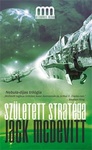




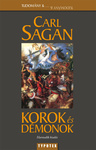
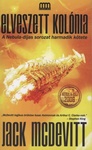






Galaktika 248.
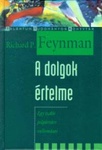



Quotes
Computer graphics are now being extended into the area of play. There is a popular game, sometimes called Pong, which simulates on a television screen a perfectly elastic ball bouncing between two surfaces. Each player is given a dial that permits him to intercept the ball with a movable “racket.” Points are scored if the motion of the ball is not intercepted by the racket. The game is very interesting. There is a clear learning experience involved which depends exclusively on Newton’s second law for linear motion. As a result of Pong, the player can gain a deep intuitive understanding of the simplest Newtonian physics — a better understanding even than that provided by billiards, where the collisions are far from perfectly elastic and where the spinning of the pool balls interposes more complicated physics.
This sort of information gathering is precisely what we call play. And the important function of play is thus revealed: it permits us to gain, without any particular future application in mind, a holistic understanding of the world, which is both a complement of and a preparation for later analytical activities. But computers permit play in environments otherwise totally inaccessible to the average student.
Quotes
A scientist of my acquaintance says, 'If the aliens would only keep all the folks they abduct, our world would be a little saner.'
But what worries me is that a Carlos [a spiritual healer] will come along with bigger fish to fry - attractive, commanding, patriotic, exuding leadership. All of us long for a competent, uncorrupt, charismatic leader. We will leap at the opportunity to support, to believe, to feel good. Most reporters, editors and producers, swept up with the rest of us, will shy away from real sceptical scrutiny. He won't be selling you prayers or crystals or tears. Perhaps he'll be selling you a war, or a scapegoat, or a much more all-encompassing bundle of beliefs than Carlos's. Whatever it is, it will be accompanied by warnings about the dangers of scepticism.
In theological discussion with religious leaders, I often ask what their response would be if a central tenet of their faith were disproved by science. When I put this question to the current, Fourteenth, Dalai Lama, he unhesitatingly replied as no conservative or fundamentalist religious leaders do: in such a case, he said, Tibetan Buddhism would have to change.
Even, I asked, if it's a really central tenet, like (I searched for an example) reincarnation?
Even then, he answered.
However, he added with a twinkle, it's going to be hard to disprove reincarnation.
During the Great Depression in America, teachers enjoyed job security, good salaries, respectability. Teaching was an admired profession, partly because learning was widely recognized as the road out of poverty. Little of that is true today. And so science (and other) teaching is too often incompetently or uninspiringly done, its practitioners, astonishingly, having little or no training in their subjects, impatient with the method and in a hurry to get to the findings of science - and sometimes themselves unable to distinguish science from pseudoscience. Those who do have the training often get higher-paying jobs elsewhere.
'Star Trek', for example, despite its charm and strong international and interspecies perspective, often ignores the most elementary scientific facts. The idea that Mr Spock could be a cross between a human being and a life form independently evolved on the planet Vulcan is genetically far less probable than a successful cross of a man and an artichoke.
Those who seek power at any price detect a societal weakness, a fear that they can ride into office. It could be ethnic differences, as it was then, perhaps different amounts of melanin in the skin; different philosophies or religions; or maybe it's drug use, violent crime, economic crisis, school prayer, or 'desecrating' (literally, making unholy) the flag.
Quotes
mihelyt boldognak érzem magam, máris a halálra gondolok, és a végén már kételkedem abban, hogy csakugyan boldog vagyok-e
Újságok, plakátok, rádiók, televíziós hálózatok - a háborús propaganda oly hatalmas, hogy nyomtalanul el tudja törülni azt a fél tucat pacifista cikket. A sajtószabadság csakugyan fennáll, de nincs semmi hatása. Egy olyan országban, ahol minden tájékoztatási eszközzel a pénz rendelkezik, az igazság gyönge hangját egykettőre elfojtják a hazugság és a megvesztegetés roppant orgonái.
Quotes
Hozzászokhattunk már, hogy a falusiak hiszékenysége, a városi lumpen rétegek tudatlansága és a kisvárosi szűklátókörűség durva előítéleteket szül, de az olyan embereket, amilyenek mi is vagyunk, úgy érezzük, nem olyan könnyű becsapni.
A sajtószóvivők és az újságírók a megmondhatói, hogy a modern média szörnyeteg, amelyet etetni kell.
A tudomány emberei ki nem állhatták ezt a könyvet [Imanuel Velikovsky: Ütköző világok], amely az asztronómia eredményeit a régi asszírok neurózisainak sületlen értelmezéseivel helyezte egy szintre. Ráadásul Velikovskyból felkapott hírességet csinált a természettudományos szempontból analfabéta irodalmi elit, akik - a tudomány-népszerűsítő Carl Sagan szerint - a múltat kutató lélekgyógyászt einsteini, newtoni, darwini, de minimum freudi mércével mérték, felháborító nemtörődömséggel és teljesen alaptalanul.
Velikovsky szellemi örököse az Ütköző világok megjelenésekor 15 éves svájci fiú, később hotelszolga, majd börtönviselt sikkasztó-csaló. Úgy hívták: Erich von Däniken.
Quotes
1970-től 1974-ig a fekete lyukakkal foglalkoztam. 1974-ben aztán életem talán legmeglepőbb felfedezését tettem: a fekete lyukak nem is teljesen feketék! Ha az anyagi világ kis méretekben megnyilvánuló viselkedését is figyelembe vesszük, arra az eredményre jutunk, hogy a fekete lyukból sugárzás és részecskék szivároghatnak ki. A fekete lyuk tehát a forró testhez hasonlóan sugárzást bocsát ki.
Megfigyeltem, hogy még az eleve elrendeltetés híve is, aki azt állítják, hogy semmit sem tehetünk ellene, szétnéznek, mielőtt átmennek az úttesten.
Mivel nem tudjuk előre megjósolni az emberi viselkedést, elfogadhatjuk azt az effektív elméletet, miszerint az emberi lénynek szabad akarata van, és el tudja dönteni, hogy az egyik vagy a másik cselekedet helyes-e. Úgy tűnik, hogy a túlélési képesség szempontjából határozott előnyökkel jár, ha hiszünk a szabad akaratban és a tettekért való felelősségben. Ezt a hitet a természetes kiválasztódás megerősíteni látszik. Azt, hogy a beszéd által közvetített felelősségérzés kontrollálni tudja-e a DNS által közvetített agresszív ösztönt, a jövő fogja eldönteni. Ha a válasz negatív, akkor az emberi a faj a természetes kiválasztódás egyik zsákutcájának minősül.
Quotes
A kételkedés szabadsága igen fontos dolog a tudományban, és azt hiszem, más területeken is.